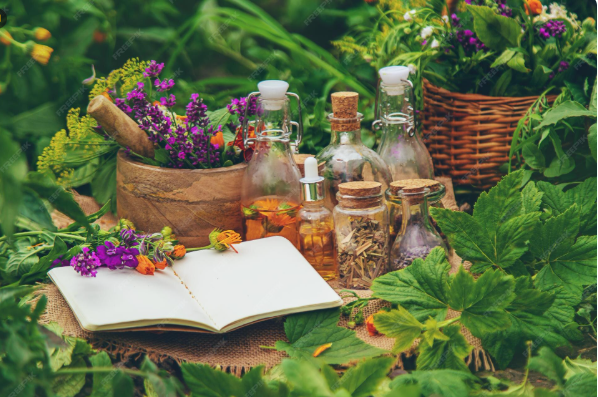
Something ancient lies beneath the soil’s surface as yarrow peeks through a tangle of young leaves and mint emerges alongside chamomile in a peaceful nook of a suburban garden. People who are drawn to these areas are not trying to reject modern medicine; rather, they are learning that caring for a patch of herbs may be just as fulfilling as going for a morning stroll or writing in a notebook. A backyard apothecary, where plants and intention meet and therapeutic practices blend science and folklore, has been a growing phenomenon.
There is a historical and evocative heritage to the term “apothecary” itself. Originating from the Greek word apotheca, which means “a place to store herbs and remedies,” it originally denoted a specialist who blended and administered medications, much like a modern pharmacist. Healing was quite local back then; remedies were cultivated, gathered, and produced within a community using empirical knowledge that had been passed down through the generations. The backyard pharmacy of today is a modern resurrection of that relational approach to health rather than a sentimental reenactment.
Key Context — The Backyard Apothecary Revival
| Aspect | Details |
|---|---|
| Concept | Personal gardens focused on medicinal and healing herbs |
| Historical Roots | Apothecary traditions drawing from ancient Greek and global practices |
| Common Plants | Chamomile, yarrow, nettle, lemon thyme, calendula |
| Activities | Growing, drying, tincture making, herbal infusions |
| Purpose | Self‑care, connection with nature, mindful wellness |
| Books Referenced | The Backyard Herbal Apothecary, Secret Medicines from Your Garden |
| Contemporary Emphasis | Safety, sustainable practice, integration with modern knowledge |
The pattern of bees flying from flower to flower and people going back to plant-based activities is quite similar: both are motivated by ecological intelligence. Gardeners that grow therapeutic plants are absorbing centuries’ worth of accumulated botanical knowledge, just as bees gather nectar to support their hive. Even if folklore energizes discussions about what a plant feels like or aims to do, many proponents characterize the process as empowering rather than supernatural.
I was just walking through the well-labeled rows of nettle and lemon balm in an urban backyard when I saw how intentional individuals had become about their planting. The gardener, whom I happened to meet at a plant exchange, talked about her chamomile as if it were a reliable companion against restless nights. She claimed to have discovered throughout the years how the plant reacted to shade and soil, as well as how its subtle aroma tended to calm her kids before bed. A sense of agency over one’s own wellness practices is reinforced by this type of closeness with plants, which seems both strategic and personal.
This tendency, in many respects, is a reflection of a change in the way individuals interact with their own health. Herbs used to be something you could buy at a store with a pretty label, but now you grow them, watch them, and work with them on a daily basis. This change has been especially helpful in cultivating mindfulness, which is the deliberate focus needed when caring for seedlings, tracking their development, and making tinctures or teas that could eventually become a regular ritual. It is a supplement to contemporary pharmacology rather than a rejection of it.
Herbal medicines’ scientific foundations are also becoming more well-known, not only among enthusiasts but also in academic circles. Certain compounds, including the curcuminoids found in turmeric and the withanolides found in ashwagandha, have demonstrated quantifiable immunomodulatory and anti-inflammatory properties. This pharmacological foundation aids in bridging the gap between evidence-based methods and previously seemingly remote customs. Beyond its aesthetic value to the garden, it makes people care about the plant they care for.
Nevertheless, it is crucial to approach this topic cautiously and with interest. Because of their biological activity, plants can have different health impacts depending on dosage, preparation, and individual physiology. Therefore, a backyard pharmacy can serve as a laboratory for wellness research, where observation and learning take place with purpose and care, but it cannot replace expert medical guidance. Herbalists place a strong emphasis on sustainable collection, safety, and accurate identification, particularly when it comes to wild species.
Some urban gardening organizations have recently begun holding seminars on ethical herb farming. In addition to discussing soil and sunlight, these workshops include the integration of traditional wisdom into modern living. Facilitators frequently cite books like Secret Medicines from Your Garden and The Backyard Herbal Apothecary, highlighting the integration of historical viewpoints with useful, contemporary applications. People who wish to understand plants rather than just admire them will find these resources especially helpful.
At one of these workshops, a participant talked about how taking care of her garden has unexpectedly improved her mental health. After a hectic day, she finds that cutting fresh herbs and creating a homemade salve reduces her stress levels considerably. She compared this activity to meditation. Because it struck a chord as something subtly deep about the relationship between humans and environment, rather than because it was dramatic, the revelation felt particularly apparent.
There is an economic component to the tendency as well. Herb-filled backyards can lessen need on commercial products for everyday necessities, such as poultices for minor irritations, infused oils for dry skin, and teas for digestion. Growing medicinal plants at home is a surprisingly inexpensive option that rewards patience and stewardship more than consumer spending, even if modern wellness retail frequently markets them at a premium price.
However, there is a cultural realignment taking place that goes beyond affordability and usefulness. The backyard pharmacy promotes a very interactive kind of self-education. After all, gardening is hardly a passive activity. It calls for tolerance, adaption, and observation—qualities that are incredibly useful in reducing the hectic pace of everyday life. Observing seedlings grow and develop serves as a silent reminder that advancement frequently occurs gradually rather than all at once.
The way people discuss their gardens reflects this small step forward. Neighborhood get-togethers now frequently feature conversations about companion planting, soil enrichment, and pollinator care. Individual plant health serves as a stand-in for greater environmental consciousness in these discussions, which have their roots in ecology and community resilience.
It is important to remember that the popularity of backyard apothecaries is not a passing trend. It is a progression that feels both practical and empowering: a move toward more participatory engagement with the environment and health. We develop a type of wellness literacy that is based on firsthand experience and ecological awareness by knowing the plants we grow and using them purposefully.
The magic that people frequently talk about is relational rather than fanciful, such as how a cup of freshly brewed mint calms the mind after a demanding workday or how a steam of water scented with rosemary seems to calm a room. These moments of connection serve as a reminder that therapeutic techniques can be both age-old and surprisingly relevant in the modern world, even while they do not promise to cure all ailments.