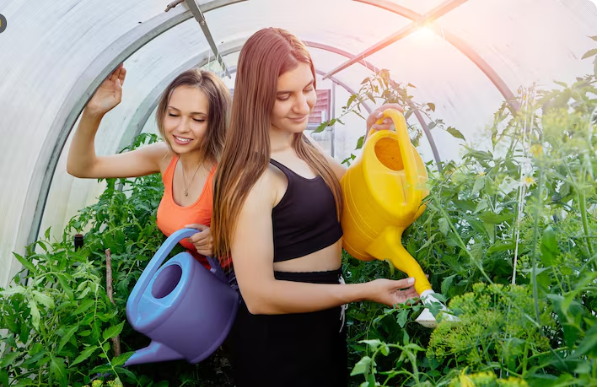
A row of mismatched porcelain pots growing purple sage, lemon balm, and holy basil are situated on a small patio in the Wicker Park district of Chicago. The purpose of their presence is not aesthetic. The 32-year-old yoga instructor Kamryn, who is caring for them, calls the arrangement her “fitness anchor.” She claims that in the past two years, she has not required a gym.
A generation that yearns for balance is subtly redefining gardening, which was once thought of as a charming hobby for retirees. These days, it’s more about how much mint you can gather to reduce anxiety or how often your shoulders burn from carrying compost than it is about decorative flowers. Herbal gardening has emerged as a surprisingly successful alternative to traditional workout regimens, or at the very least a supplement to them.
Younger folks who are dealing with an increase in gym memberships, overstimulating digital fitness apps, and general exhaustion seem to be especially affected by the transition. This group is reconsidering how wellness fits into their daily routine after growing up with YouTube tutorials and side projects. Herbal gardens are more than simply a pastime for them. They are a way of thinking.
Key Context: Herbal Gardening as a Fitness Trend
| Aspect | Details |
|---|---|
| Core Idea | Gardening, especially herbal, is being adopted as a wellness practice. |
| Key Demographics | Millennials and Gen Z leading adoption. |
| Activities Involved | Digging, planting, weeding — physical and meditative. |
| Primary Benefits | Physical movement, stress relief, healthier eating. |
| Notable Trend Drivers | Affordability, accessibility, mental health, tangible results. |
| External Reference |
The activity that comes from gardening is ingrained with purpose, unlike weightlifting or running on a treadmill. Every arm stretch to trellis a vine or crouch to trim basil has a specific purpose. Arm strength is increased by digging. Flexibility is increased via bending. The core is engaged when lifting soil sacks. However, since no one is looking, none of it seems performative.
Beyond the technicalities, the dual reward system of herbal gardening appears to be especially novel. You cultivate life in addition to moving your body. Seeing thyme flourish on a windowsill you nearly forgot you possessed has an emotional benefit. One person in Minneapolis referred to her herb garden as “a gym that feeds me.”
What many practitioners say anecdotally is supported by research. Similar to dancing or weight training, gardening is a moderately intense activity that can dramatically lower cortisol levels. The influence is quantifiable and not merely theoretical. Heart rates increase. They employ their muscles. There is a noticeable decrease in stress. And the atmosphere? Significantly better.
Putting your hands in the ground and knowing that you are cultivating medicine—real, useful medicine—has an innately positive vibe. For sleep, use chamomile. For memory, rosemary. Calendula for skin. These are more than just plants. They are useful instruments. When properly grown, they are used as ingredients in tinctures, teas, and salves, which are tangible products of hard work.
The practice is especially intriguing because it is easily accessible. A gym requests cash, time, and transportation. All a garden asks for is intention. A sunny balcony, a few seeds, and a little perseverance can practically start a growth-based fitness journey. The advantages are numerous, the cost is minimal, and the entry barrier is almost nonexistent.
Many people found this by chance during the pandemic. People started using their rooftops, backyards, and fire escapes as inside gyms closed. What began as a necessity turned into a long-term change. Compact herbal kits and vertical planters became very popular. Searches for “balcony herb garden” on Google increased. Certain tendencies wane. This one developed roots.
Something changed for me as I smelled the crushed lemon thyme in my palm. It was the end of May. After a frost surprise, I had just spent two hours replanting, and my arms hurt. However, the sensory reward—the aroma, the fulfillment—was more energizing than any spin class I had gone to in months.
Additionally, mindful living—another emerging pillar of wellness culture—and herbal gardening go hand in hand. The practice promotes observation, demands presence, and compels silence. You start to observe sun angles, soil moisture levels, and marjoram’s unusual tenacity. You’re not merely shifting. You’re observing.
And it spreads to other areas when that type of observation becomes second nature. Now that you have an abundance of fresh herbs to add depth to basic dishes, you start eating differently. You begin to sleep better because you’ve bonded with a slower rhythm, not just because of the physical effort. You interact with your environment more deliberately.
Additionally, a surprising sense of camaraderie is reported by many herbal gardeners. Like rare vinyls, seeds are traded. Local message boards and farmers markets are places where people exchange advice. Solutions are exchanged. Fitness is what promotes human and environmental connection.
Regarding the mental health component, research has connected gardening to reduced rates of depression and enhanced cognitive function. It’s more than just gardening; it’s a structured activity that needs to be completed on a regular basis, devoid of screens or measurements. In ways that elliptical machines seldom accomplish, it provides control, grounds the day, and boosts confidence.
Herbal gardens won’t, of course, take the role of conventional gyms for everyone. Not all fitness objectives may be achieved by carrying compost or weeding oregano. However, they provide a very flexible option for anyone looking for wellbeing, consistency, and purpose without the clinical appearance of a gym.
This move to herbal gardening as a kind of exercise is not about cutting back. It’s about changing the definition of productivity. Instead of separating movement from life, it should be included into it. Nourishment leads to fitness as a result. Sweating is the result of care.
The latest fitness fad doesn’t usually involve calorie counting or Lycra use. It occasionally has a subtle lavender scent and resembles a repurposed pot on a ledge in the sunlight. Furthermore, it whispers rather than yells most of the time.