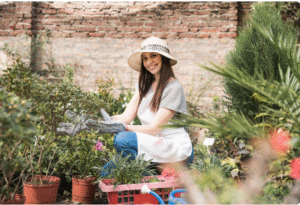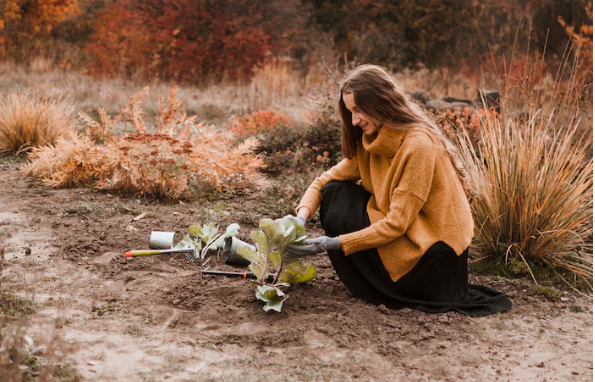
With hands buried in dirt and the smell of moist earth clinging to fingertips, it starts out gently. There’s no algorithm, no hurry, and no ping. Simply the obvious existence of life beneath your palms. The first lesson that soil imparts is presence.
Gardening is more than just a pastime for a lot of individuals. It’s a comeback, a gentle descent into something timeless and fundamental. Over time, sowing seeds turns into a conversation. Digging, watering, and pruning all turn into silent agreements with nature: I’ll wait. It turns out that waiting has a really powerful soothing impact on the mind.
| Topic | The Spiritual Side of Soil |
|---|---|
| Central Focus | The emotional and spiritual benefits of gardening |
| Psychological Benefits | Reduced stress, mindfulness, self-esteem, patience |
| Therapeutic Applications | Used in trauma recovery, rehabilitation, elder care |
| Connection Element | Reconnection to nature, spiritual stillness, intuition |
| Notable Insight | Gardening mimics life cycles, offering reflection |
| External Resource |
For many people over the past ten years, gardening has evolved into a very personal kind of healing. The soil provides a place where nothing needs to be fixed—just tended—for everyone, from young adults battling burnout to elderly people silently facing bereavement. And the change from mending to tending is really therapeutic.
People can access what psychologists call the biophilia hypothesis—a human predilection for biological systems—by gardening. This has been investigated, so it’s not simply poetic. Levels of cortisol decline. Heart rates decrease. Blood pressure levels out. Gardening becomes a very effective method of lowering the background noise of stress because of its steady and grounded practices.
However, the emotional rhythm of gardening is what really sets it apart. Plant time is not an urgent matter. Slowly, tomatoes ripen. Lavender has a delicious season of its own. Additionally, this deliberation—this refusal to hurry—creates a stabilizing and restorative emotional cadence.
I was talking to a friend who is in the process of getting over her depression, and I observed how frequently she brought up her little balcony garden. With a slight smile, she remarked, “That rosemary bush makes me feel like I’m not unraveling.” She wasn’t waxing poetic. She was giving name to something very real: the stability that comes from physical care.
Horticultural treatment has become increasingly popular in therapeutic settings. Gardens are now planted in hospitals, addiction treatment facilities, and assisted living facilities for emotional purposes rather than aesthetic reasons. Touching leaves can help patients who have lost their ability to speak. Pulling weeds helps traumatized people re-establish a connection with their bodies. For many, it’s their first nonverbal connection built only on compassion and forgiveness.
However, not every garden is clinical. The landscape transforms into something else—holy—during quiet moments. The mycelial webs and rotting leaves on the forest floor serve as a reminder that change doesn’t always appear lovely. Rich in decay, compost mounds turn become altars of rebirth. And what could be more convincing than witnessing deterioration turn into food?
People start to perceive subtle energies in soil through observation. This is spiritual to some. They claim to sense something—stability, contentment, a sort of throbbing vitality—when they kneel next to raised beds or sit silently by a patch of natural grass. These are not statements of mysticism. These are experiential realities that are difficult to quantify.
At a seasonal meditation circle, I recall reclining in a mossy grove. I felt for a long time that the ground was supporting me not just physically but also emotionally when my palms made contact with the wet ground. There was no drama. Just genuine. That hour of quiet provided me more insight than any gadget had ever given me after weeks of being lost in digital overload.
The soil provides channels, not just mindfulness, for individuals who are drawn to spiritual practice. Some people practice intuitive soil connection, which involves utilizing their bodies as tools to feel peace, stress, or energy. Others may use soil networks to embark on spirit journeys, especially those who practice earth-based spirituality. Exploration of soil as a dynamic web of life rather than lifeless material is encouraged by these travels, which are frequently led by profound meditative states.
One practitioner recounted how she would lay on a garden blanket, breathe deeply into the earth beneath her, and come away with what she would later refer to as “root wisdom.” These exchanges, whether symbolic or spiritual, highlight how soil may educate not only about growth but also about surrender.
There are significant metaphors in this emotional conversation with soil. It takes time for seeds to germinate. Setbacks lead to growth. Certain things flourish. Others don’t. It remarkably resembles the highs and lows of human existence. We bury setbacks. We cultivate little pleasures. And things bloom, sometimes spectacularly, sometimes unexpectedly, when the time of year is perfect.
As part of public health, several cities now promote gardening through planned community programs. In places that have long lacked access to nature, urban farms, rooftop gardens, and healing green spaces are emerging. These are not opulent facilities. They are actually peaceful, life-affirming patches. Additionally, they are especially helpful to young people and the elderly, who are frequently left alone in concrete settings.
A few wildflower seeds thrown into a neglected patch or a basil plant on a kitchen sill are examples of how early gardeners start their journey. However, more than just vegetation frequently appears. It’s a relationship, and like all healthy relationships, it requires presence, patience, and mutual gain.
People form what some therapists refer to as “micro-bonds” with nature through their interactions with the soil, noting its responsiveness, texture, and aroma. These connections might not seem important at first. However, they can eventually cultivate a type of emotional resilience that is extremely uncommon in contemporary society.