Tag: Soy

  • From Soil to Serum , How Homegrown Botanicals Are Redefining Skincare and Changing Beauty Forever

    From Soil to Serum , How Homegrown Botanicals Are Redefining Skincare and Changing Beauty Forever

    Skincare is actually being reinvented from the ground up in a very subtle way. One particularly creative trend toward enhancing beauty from the earth itself is the “From Soil to Serum” movement. Customers have been lured to authenticity during the last ten years, selecting freshly picked botanicals over the synthetics that used to predominate on bathroom shelves. Driven by a shared desire to reestablish a connection with nature through ritual and care, the change feels natural both literally and symbolically.

    The realization that potency starts from the root lies at the heart of this change. The natural chemistry of botanicals such as calendula, green tea, and rosehip is being preserved by harvesting them at their most nutrient-rich times. According to scientists, these freshly pressed extracts maintain noticeably larger concentrations of vitamins and antioxidants, especially those that fight off free radicals, which cause premature aging. To put it simply, an ingredient’s influence on your skin is stronger the closer it is to its source.

    Key FocusDescription
    Main ConceptThe rise of homegrown botanicals in skincare emphasizing purity, freshness, and sustainability
    Core AdvantageLocally grown ingredients with higher potency and lower environmental impact
    Notable IngredientsAloe Vera, Chamomile, Calendula, Green Tea, Rosehip Oil, Soy
    Cultural Trend“Farm-to-Face” movement encouraging natural beauty and ingredient transparency
    Authentic Source

    Beauty counters were filled with formulas that promised youth through synthetic ingredients for decades. A silent uprising is now taking root. Skincare has become very personal by utilizing the power of indigenous herbs. Applying a lotion is no longer enough; you now need to cultivate something living, see it grow, and then turn it into a product that feeds you back. Your complexion and your sensation of belonging to something real both benefit greatly from the procedure.

    This return to the soil has been boosted by celebrities. Sourcing straight from their own gardens, Miranda Kerr’s KORA Organics and Tata Harper’s Vermont line have emerged as leading examples of the farm-to-face concept. Both women have emphasized how the timing of nature—harvesting in the ideal temperature or sunlight—can affect how well the finished product performs. Customers who are looking for honesty in a field that is sometimes tainted by chemicals and branding have found this transparency to be especially helpful.

    Growing skincare ingredients is a ritual and a cure for many. Taking care of aloe plants or drying chamomile flowers provided a tiny but significant sense of purpose during the pandemic, when isolation made time seem endless. Making an infusion or combining a homemade serum allowed people to have a sense of purpose in providing treatment. In contrast to passive beauty routines, dermatologists now recognize this emotional advantage, pointing out that “gardening-based skincare” significantly improves stress reduction. It turns out that your body knows the cycle and relaxes when your hands come into contact with the dirt that nourishes your skin.

    The long-held beliefs of herbalists are still supported by science. Rosehip oil promotes collagen renewal, chamomile and calendula reduce inflammation, green tea’s polyphenols combat oxidative stress, and compounds in aloe vera deeply moisturize and speed wound healing. These findings are supported by studies published in Dermatology Times, signaling a move away from folklore and toward validation based on facts. Now, scientists are investigating how molecular activity, which frequently vanishes in mass production, may be preserved by quick extraction—within hours after harvest.

    The sustainability of this movement is what makes it so intriguing. Shorter supply chains and far lower transportation emissions result from using locally derived botanicals. Regenerative farming techniques are used by many small producers to restore soil health while growing their crops. This makes the method extremely effective for both the skin and the earth. In many instances, these micro-farms serve as instructional centers, instructing city dwellers on how to cultivate herbs and make their own face oils, bringing sustainability closer to reality than just a theoretical concept.

    Transparency is now considered a luxury. Customers want to know not only what’s in a bottle but also where it originated from and how it was handled. In response, beauty brands are creating farm profiles and maps of ingredient origins that resemble food labeling regulations. The link between skincare and agriculture is now very evident because of this change—what you put on your skin should be treated with the same respect as what you put on your plate.

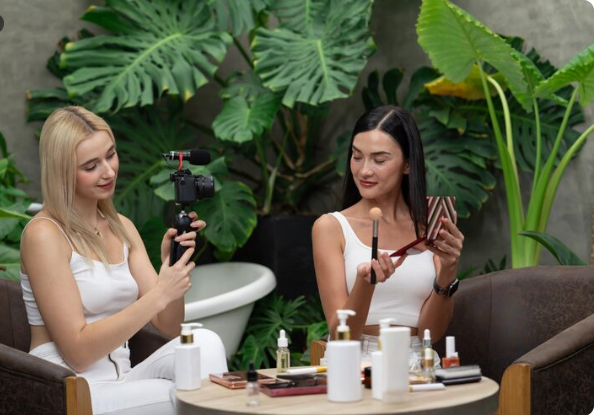
    This botanical revival has been fostered by social media. Influencers demonstrate how a few rose petals or a sprig of mint may transform into a calming mist that receives millions of views. Instead of making beauty seem idealistic, these visual narratives humanize it. This type of footage encourages creation—mixing, combining, and experimenting—in contrast to luxury goods unboxings. The way younger generations interact with skincare has changed as a result of the process becoming the product.

    This momentum has only been bolstered by celebrity endorsements. For example, Emma Watson has been outspoken in her support of ecological skincare, frequently expressing her admiration for small-batch producers who cultivate their own herbs. In a similar vein, models such as Gisele Bündchen attribute their glowing complexion to straightforward, plant-based regimens centered around fresh botanicals. Their support lends legitimacy to a strategy that was previously too “DIY” for the general public.

    Big businesses are also adjusting. Companies like Aveda and Origins have centered whole product lines on plant-based science, with a focus on sustainable packaging and ethical sourcing. Their investments demonstrate a more significant economic reality: this is a long-term trend toward more environmentally friendly and thoughtful beauty practices rather than a passing trend. They have made sustainability appealing without compromising performance by fusing cutting-edge chemistry with botanical research.

    Personalization is also key to the movement’s success. The farm-to-face method promotes experimentation, in contrast to traditional skincare, which frequently categorizes customers into broad groups—dry, oily, and mixed. People are learning how botanicals they have cultivated themselves affect their skin in different ways. One individual may find a homemade calendula toner invigorating, while another may find it calming. Beauty routines are not only effective but also emotionally fulfilling when self-awareness and creativity are combined.

    There are difficulties hidden underneath the glitz. It takes effort to keep uniformity across tiny batches. The potency of ingredients is influenced by rainfall, soil type, and even seasonal temperature changes. Innovation, however, keeps up. Scientific refinement is being applied to natural fermentation, cold-press extraction, and plant infusions. These developments have demonstrated that nature and technology can coexist harmoniously by making homegrown skincare incredibly long-lasting in terms of quality and shelf life.

    A more comprehensive idea—skincare as stewardship—is developing from this juncture. From raising seedlings to making a serum container, every product conveys a tale of caring. It serves as a reminder that wellbeing need not be divorced from its origin. We are cultivating responsibility, patience, and thankfulness by growing medicinal herbs. This method has changed the story of beauty itself throughout time, making it more subdued, compassionate, and remarkably sustainable.