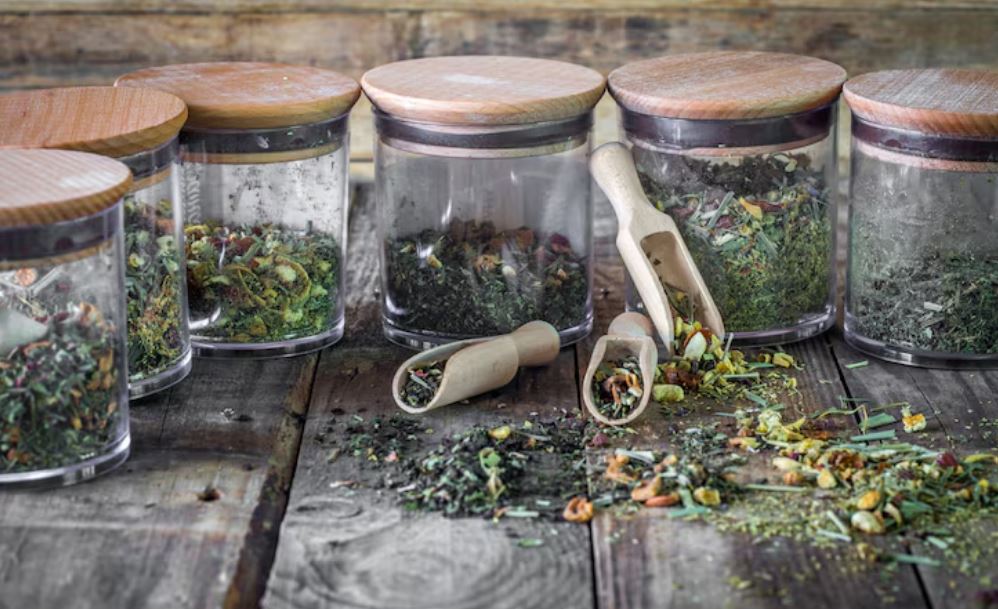
Ethnobotanist David Winston grinds dried roots into powder in a dimly lit workshop in rural New Jersey. His shelves feel timeless, filled with jars of dandelion root and ginseng. However, his hands follow the dictates of contemporary necessity. He stands for a profession that is torn between respect for tradition and the unrelenting advancement of technology; this conflict is becoming more and more referred to as the “herbalist’s dilemma.”
This problem has deep roots. Throughout history, herbalists have depended on their senses—tasting, smelling, and observing. However, during the last 20 years, that practice has become entangled with regulatory frameworks that require scientific precision and clinical evidence. Although the goal of the EU’s 2004 Directive on Traditional Herbal Medicinal Products was to safeguard public health, it also translated centuries of customs into technical jargon. What was previously dependent on ancestry and training is now subject to data sheets and laboratory testing.
| Aspect | Detail |
|---|---|
| Core Issue | The struggle to balance ancient herbal traditions with scientific validation and modern regulation |
| Regulatory Reference | EU Traditional Herbal Medicinal Products Directive (2004/24/EC) |
| Market Projection | Expected to reach USD 89.05 billion by 2029 (Frontiers in Medical Technology, 2024) |
| Cultural Impact | Traditional herbalists face increased scrutiny and modernization pressures |
| Technological Influence | Artificial Intelligence and biotechnology are reshaping herbal research |
| Ethical Concern | Intellectual property, safety, and ownership of indigenous knowledge |
| Reference Link | https://pmc.ncbi.nlm.nih.gov/articles/PMC9323453 |
A hierarchy of proof was established by the regulation; the more compelling the claim, the more compelling the supporting evidence. Despite its obvious good intentions, this principle was incredibly disruptive. Regulators unintentionally removed the emotional and cultural context of herbalism by framing it in terms of pharmaceuticals. The Directive changed the definition of “tradition” in addition to regulating goods.
As noted by Anthony Raphael Gatt in Frontiers in Medical Technology (2024), herbalists were compelled to defend their practices using novel scientific terminology. Ancestral knowledge and Western biomedical logic clashed, creating a philosophical battlefield. Long regarded for their empathy and intuition, herbalists now had to explain their experiences using statistics rather than their senses.
Consumer interest in herbal medicine has skyrocketed in recent years. Demand has been rekindled by chronic illnesses, rising healthcare costs, and a growing inclination toward natural remedies. The European herbal market, which is expanding at a rate of more than 6% per year, shows that consumers are looking for alternatives that are genuine and personal. However, corporate interests eager to industrialize herbal medicine have also been drawn to this rise. The shelves that formerly contained tinctures with hand labels have been replaced by sleekly branded “adaptogenic blends,” whose advertising is driven by algorithms rather than narrative.
Winston frequently points out that the secret to true healing is synergy, or the interaction of several herbs. In an interview with NutraIngredients, he clarified that “products made with a single ingredient are less effective than formulas created by skilled herbalists.” His method, which combines science and art, embodies a philosophy that technology still finds difficult to convey. Fundamentally, herbal medicine treats individuals rather than illnesses.
However, artificial intelligence is gradually making its way into this field. AI finds patterns in centuries’ worth of herbal literature that humans might miss. Traditional pharmacopoeias are now analyzed by machine learning models in an effort to find novel therapeutic compounds. As a link between pharmacology and folklore, researchers have characterized this combination of data and nature as especially novel.
Although it has risks, this technological turn is remarkably effective at identifying potential cures. AI has the potential to spread false information, as the Chestnut School of Herbal Medicine warns. A Latin name that is incorrectly translated or a formula that is misinterpreted can have dire repercussions. We run the risk of losing the subtlety of herbal wisdom—the smell of freshly crushed mint, the feel of chamomile between fingers, the natural tendency to blend rather than isolate—if we substitute automation for mentorship.
History serves as a moving reminder of how groundbreaking science can result from ancient insight. After his experiments in the lab failed, Tu Youyou, the Chinese scientist who discovered artemisinin, resorted to traditional texts. Her traditional herbal remedies were the foundation of her Nobel Prize-winning fight against malaria. In a similar vein, aspirin was inspired by willow bark, and childhood cancer treatments originated from Madagascar periwinkle. These cases are excellent illustrations of what can happen when inquiry and heritage collide.
However, they also bring up troubling ownership issues. Who gains when indigenous knowledge is turned into intellectual property? Communities that have preserved plant knowledge for centuries frequently don’t get much credit or financial gain. Their customs run the risk of becoming corporate currency due to commercialization.
The herbal industry is still developing in spite of these obstacles. Like Winston, many herbalists incorporate contemporary quality controls while maintaining the human element of their craft. The extracts made by his company using a method known as Spagyric alchemy serve as an illustration of how contemporary chemistry and ancient philosophy can coexist. This method, which uses science to enhance intuition rather than to replace it, seems especially helpful.
Herbalism has become aspirational at the cultural level. Celebrities and wellness influencers like Miranda Kerr and Gwyneth Paltrow have turned conventional tonics into symbols of an opulent lifestyle. With subscription boxes and simple packaging, their brands position herbal medicine as stylish self-care. Although this visibility has significant commercial potential, it also runs the risk of diluting authenticity. “We’ve gone from storytelling to sales copy,” a herbalist told The New York Times.
But optimism endures. Researchers are working with traditional healers throughout Europe and Asia to record remedies before they become extinct. Nowadays, functional MRI studies monitor the effects of yoga and meditation on brain activity, providing scientific justifications for practices that were previously written off as superstitious. These attempts demonstrate how the two systems—ancient and modern—can complement one another rather than conflict by fusing ethnobotany and neuroscience.
What appears is a continuous dialogue rather than a conflict between the past and the future. The herbalist’s predicament serves as a reminder that healing is relational rather than just biochemical. In a fragile ecosystem of care, it links the patient, the practitioner, and the soil.
Winston still feels that connection in every tincture jar. He confidently transitions between centuries, respecting the ancient rhythm while measuring dosages with contemporary accuracy. His art reflects the idea that, when applied properly, technology can enhance human interaction rather than replace it. That may be the most promising conclusion of all: when tradition and technology are allowed to coexist, they can produce something significantly better—healing that is both accurate and deeply human.