It’s easy to forget how commonplace wellness used to be because the discourse surrounding it has changed so much to emphasize luxury. You were supposed to outsource taking care of yourself somewhere between the emergence of $14 smoothies and boutique fitness studios.
However, the most long-lasting types of wellness still start at home, typically with readily available resources. A pair of shoes near the entrance. On the kitchen counter was a notebook. A windowsill with a tiny patch of sunlight.
| Key Context | Details |
|---|---|
| Core idea | Wellness can be cultivated through low-cost, self-directed habits rooted in daily life |
| Cost reality | Many effective wellness practices are free or inexpensive |
| Primary domains | Physical movement, food, sleep, mental health, social connection |
| Cultural tension | Wellness as lifestyle branding vs. wellness as lived practice |
| Accessibility | Practices adaptable across income levels and living situations |
| Time frame | Benefits accrue gradually through consistency |
Before walking became an exercise activity, it was a mode of transportation. It’s one of the few remaining movements that only requires time. Parks, sidewalks, and even the aisles of grocery stores serve as peaceful heart-training areas.
An older neighbor of mine used to walk the same route every morning at precisely 6:30, rain or shine, with his hands clasped behind his back as if it were a ritual rather than an exercise. No earphones. No app for tracking. He appeared obnoxiously steady.
The contemporary fitness industry has done a remarkable job of persuading people that effort is only worthwhile when it is quantified. However, bodies react to consistency as much as they do to intensity. Better sometimes.
Bodyweight exercises are obstinately effective; they can be learned once and practiced for years. Trends don’t matter to push-ups. There is no need to update squats. There is always room on the floor.
Wellness marketing is most effective when it comes to food. In a seemingly chaotic world, subscription boxes, specialty powders, and organic labels offer control. Additionally, they subtly imply that health care is inherently costly.
One of the best indicators of one’s financial and physical well-being is still cooking at home. Not fancy cooking. Not cooking with aspirations. Just using familiar ingredients to feed yourself most days.
Stretched over multiple meals, a pot of beans on the stove still provides fiber and protein without any fuss. Ignored by glossy cookbooks, frozen veggies retain patience and nutrients in equal measure.
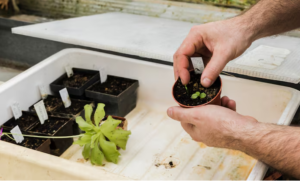
Saving money is not the only benefit of growing even a small amount of food. It changes how you relate to time. Whether you optimize them or not, herbs grow on a windowsill. Not because they are productive, but because they are alive, you pay attention to them.
There is a moment of pride that no wellness purchase ever fully satisfies when a basil plant truly flourishes for the first time.
Like fitness, mental health has become so professionalized that people are reluctant to try anything on their own. Counseling is beneficial. Repetitive, silent activities that don’t surprise the nervous system are also beneficial.
Journaling is effective because it is consistent, not because it is profound. There are no interruptions on the page. It is waiting. Patterns that were imperceptible during the day gradually become apparent.
Nowadays, there are more meditation apps than meditation instructors, and many of them are free. Rarely can ten minutes of breathing transform your life in one sitting. It does alter your level of discomfort tolerance, which ultimately matters more.
The most underappreciated wellness intervention is still sleep. It fixes nearly everything for free. Nevertheless, it is frequently viewed as optional and sacrificed for entertainment or productivity.
For many, choosing to go to bed at the same time every night for a month marks a turning point rather than an app. It sounds dull. In any case, it functions.
Researchers are constantly rediscovering the benefits of nature using new terminology. Reduce the cortisol levels. elevated mood. Increased concentration. The trees remain unimpressed as the evidence mounts.
In a culture where value is determined by output, spending fifteen minutes sitting on a bench without a plan feels suspiciously indulgent. Usually, the point is that discomfort.
At some point, maintaining wellness becomes more important than improving it. preventing the system from veering too far off course. It’s a small but significant change.
When I realized how little of this required spending money, I became aware of my own resistance.
Social connections, which are frequently discussed in abstract terms, typically occur in particular, repeatable locations. a routine stroll with the same individual. A phone call once a week. The calendar is anchored by a volunteer shift.
It’s not always large gestures that bring about a sense of community. It is remarkably inexpensive because it is based on low-stakes consistency.
Volunteering appears alongside diet and exercise in longevity studies for a reason. It turns out that feeling helpful controls stress in a way that supplements can’t.
Expensive wellness has some aesthetic appeal. matching attire. tidy areas. carefully chosen routines. It appears well-organized, which is reassuring.
The less expensive version is more disorganized. Leftovers, bad mornings, and missed days are all part of it. It continues to function.
The most important thing is agency. No product can replace the sense of competence that comes from doing things yourself, even if you do them poorly. You don’t want to be fixed. You’re taking part.
The texture of wellness that is developed gradually differs from that of wellness that is delivered quickly. It is more silent. less brittle. more difficult to market.
And maybe that’s why it’s still surprisingly cheap—because it doesn’t want to be sold in the first place.